Investment
Why Algiers still attracts real estate investors
Capital, liquidity, diaspora and regulatory framework: why Algiers remains a real estate magnet for informed residents and investors.
This article is editorial analysis and does not constitute legal, tax, financial or notarial advice.
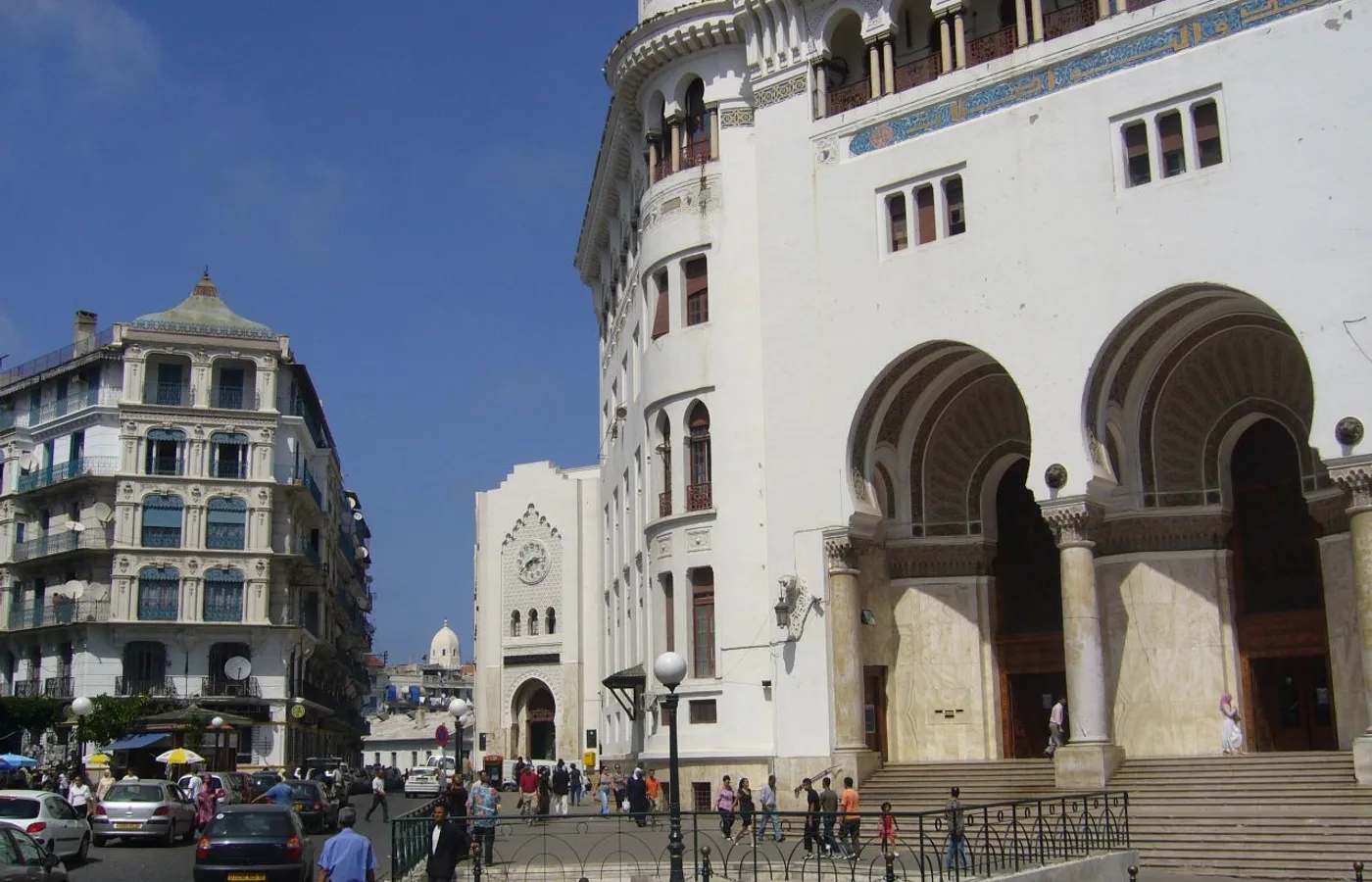
Algiers does not attract real estate investors by magic or by slogan. It attracts them with a rare combination in the region: demographic density, role of administrative and economic capital, relative depth of the secondary market, attractiveness for the diaspora, and a real estate development framework now better scrutinized by demanding buyers. In 2026, the question is no longer “Is Algiers interesting?” » — it is structurally — but “for what profile, in what segment, and with what guarantees? “.
With a national population of around 46.7 million inhabitants in January 2024 and close to 47 million in mid-2025 (ONS), urban pressure on the capital and its area of influence remains a lasting fact. It does not guarantee a return; it explains why the demand for housing, light offices and well-located residences does not disappear from one year to the next.
This article is an editorial analysis and does not constitute legal, tax, financial or notarial advice.
A capital, therefore relative liquidity
In real estate, liquidity – the ability to resell or rent within a reasonable time frame – is often worth more than a promise of capital gains. Algiers, as the capital, concentrates administrations, headquarters, representations, sought-after schools, reference hospitals and transport hubs. This concentration creates ongoing demand, even when the economic cycle slows.
This does not mean that all neighborhoods are equal. A poorly designed apartment, too expensive compared to its condition, or burdened with a fragile land record, is difficult to resell even in Algiers. Conversely, a correctly titled property, in a sought-after address, with a suitable typology (family F3/F4, well-managed studios in certain segments, rare villas), retains structural attractiveness.
Experienced investors do not generally “bet on Algiers”. They rely on an address, a typology, a consistent entry price, and a plausible exit. The capital offers more exit options than most secondary markets – this is one of its major assets – but it also punishes selection errors more quickly.
For a reading of price levels and micro markets, see Property prices in Algiers. For a comparison with Oran and Constantine, read Algiers, Oran, Constantine: where to invest for your profile?.
Diaspora and mobility: a discreet but real driver
In 2024, ONAT recorded 3,548,000 visitors to Algeria, including around 1.093 million from the diaspora. Algiers, the main airport gateway and family center for many families spread between Algeria and Europe, captures a significant part of these flows.
For real estate, the diaspora effect manifests itself in several ways:
- Heritage acquisition: a family pied-à-terre, a property for summer stays, accommodation for parents.
- Progressive return project: anticipated main residence, sometimes combined with temporary rental.
- Seasonal or medium-term rental: segment sensitive to quality of management, location and compliance.
These motivations do not automatically produce high returns. However, they support a demand for “usable” properties: well located, accessible from the airport, close to amenities, and legally clean. An investor who ignores this driver risks underestimating the depth of certain segments; an investor who overestimates it risks buying too dearly by betting on unrealistic permanent occupation.
The legal framework: brake for the improvised, filter for the serious
What also attracts informed investors is, paradoxically, the strengthening of the culture of compliance. Law No. 11-04 of February 17, 2011 relating to real estate development, promoter approval at the wilaya level, the national list of promoters, the FGCMPI, the land record book, land conservation, the notary, sale off plans governed by law 11-04 and executive decree no. 13-431, as well as that the ten-year guarantee, form a common language.
The more this language is mastered, the more readable the market becomes. Investors who agree to verify a developer before signing, to read a contract before dreaming of a sea view, and to involve the notary early, find themselves in a less chaotic environment. Those who look for shortcuts discover, sometimes too late, that the shortcut is expensive.
In practice, Algiers attracts those who want to combine urban potential and documentary discipline. This is not a casino market. It’s a selection market.
Useful guides:
- How to check a real-estate developer in Algeria
- Buying off-plan in Algeria
- Documents for a property purchase
- Property purchase risks
- S.A.F.E and real-estate analysis method
Segments getting attention in 2026
Without transforming these observations into purchase recommendations, several segments regularly come up in investor discussions in Algiers:
Family residential in sought-after communities
Stable demand, mixed use (occupy/rent/transmit), strong sensitivity to the school, access and the quality of the building. The price of entry can be high; relative liquidity compensates for certain profiles.
New compliant programs
When the developer is approved, the land is clear and the contract is solid, the new property can appeal with technical compliance and a ten-year guarantee. Selling off plans is only interesting if the timetable and guarantees are legible.
Limited luxury properties but well located
Sometimes more rational than an overvalued “luxury”. In Algiers, the address and the title often beat the decorative superfluity.
Mobility-related segments
Proximity to main roads, transport and the airport: relevant for medium-term rentals and diaspora, provided you master the management.
These segments are evolving. A neighborhood can gain in attractiveness with better access, or lose it with poorly managed saturation. The serious investor updates his thesis; he does not freeze it for ten years.
Why “again”? Because local alternatives do not replace the capital
Oran and Constantine offer real opportunities, sometimes at more accessible entry points, with their own tourist or regional theses. But Algiers retains capital attributes that are difficult to duplicate: density of institutions, concentration of premium services, depth of the resale market, and symbolic attractiveness for part of the diaspora.
The rational investor does not choose Algiers “against” other cities. He allocates. Part of the assets can target Algiers liquidity; another, a yield or seasonal use elsewhere. See also The effect of tourism on Algerian coastal cities and Algeria 2030: infrastructure and opportunities.
Traps that scare away… or are expensive
Algiers attracts, but it also punishes. Classic errors:
- Paying too much for the address without checking the actual condition and file.
- Ignore joint ownership in family inheritances.
- Confuse theoretical yield and actual occupancy.
- Signing too early with an unverified promoter.
- Underestimate the costs of work, management and rental vacancy.
- Neglecting land conservation and the consistency of the land record book.
The list is not exhaustive. It is enough to remind us that a good price does not excuse poor execution. For an error map, read Buying property in Algeria: mistakes to avoid.
Investment method adapted to Algiers
An editorial, non-prescriptive approach:
- Clarify the objective: heritage, family use, rental, mixed.
- Choose a perimeter of municipalities/neighborhoods, not “Algiers” as a whole.
- Set a maximum entry price and stick to it.
- Check the seller or promoter (approval, wilaya, national table, FGCMPI if relevant).
- Secure the land (booklet, conservation) and notary registration.
- Model cautiously the rental scenarios (low/medium/high occupancy).
- Plan the exit: resale, transmission, personal use.
This method is not spectacular. It is compatible with a capital market where marketing information circulates quickly, and where real value is in the details.
What investors look at beyond price
The price per square meter is fascinating. Sustainable investors also look at:
- the quality of the building and the common areas;
- the urban planning coherence of the sector;
- the ability to rent without excessive friction;
- payment traceability and contractual solidity;
- the reputation of the promoter on previous deliveries;
- time: holding horizon, liquidity, applicable taxation depending on status.
Algiers remains attractive because these criteria can be met there — not everywhere, not always, but often enough to warrant continued attention.
FAQ
Is Algiers too expensive to invest?
In some segments, entry prices are high. This does not invalidate the investment; this imposes a stricter selection and a clearer thesis. A property that is too expensive for its quality remains a bad deal, even in Algiers.
Is the diaspora enough to support the market?
It contributes to demand, especially for certain goods and periods. The 1.093 million visitors from the diaspora recorded in 2024 (in a total ONAT of 3,548,000) are an important context, not all-risk insurance.
Should you buy new or old?
Both can be relevant. New properties require developer verification (law 11-04, approval, sale on supervised plans). The old one requires a careful reading of the title, the condition and any joint ownership.
What is the role of the notary in Algiers?
Central. It secures the document, clarifies the file and structures the transfer. Calling it “at the end” is a sequence error.
Can we only target rental yield?
We can aim for it, but with caution. Returns are not uniform, vacancy exists, and management matters. A purely “yield” thesis without a safety margin is fragile.
How to verify a promoter in Algiers?
Via approval (wilaya), elements linked to the national table of promoters, the coherence of the project, the FGCMPI if applicable, and the delivery history. See our dedicated guide.
Sources
- National Statistics Office (ONS): https://www.ons.dz
- Algerian National Tourism Office (ONAT): https://www.onat.dz
- Official Journal — Law No. 11-04 of February 17, 2011: https://www.joradp.dz
- Ministry of Housing, Urban Planning and the City: https://www.mhuv.gov.dz
- Viva Algeria — Real estate in Algeria in 2026
- Viva Algeria — Property prices in Algiers
- Viva Algeria — Checking a developer
This article is an editorial analysis and does not constitute legal, tax, financial or notarial advice.
Related reading
Algerian diaspora: buying property in Algeria from abroad
Editorial guide for the Algerian diaspora: documents, notary, payments, off-plan purchase and checks for acquiring a property from abroad.
Read article
Tipaza, Béjaïa, Oran: zones to watch beyond Algiers
Beyond Algiers, Tipaza, Béjaïa and Oran offer distinct dynamics between coast, tourism, employment and property. A territorial reading for 2026.
Read article
New housing in Algeria: opportunity or market under pressure?
New housing in Algeria attracts buyers and the diaspora, but remains marked by supply tensions, delays and development risks. Editorial analysis.
Read article