Real estate
Real estate in Algeria in 2026: what is really changing
Legal framework, developers, off-plan sales and urban markets: what truly structures Algerian real estate in 2026, beyond the listings.
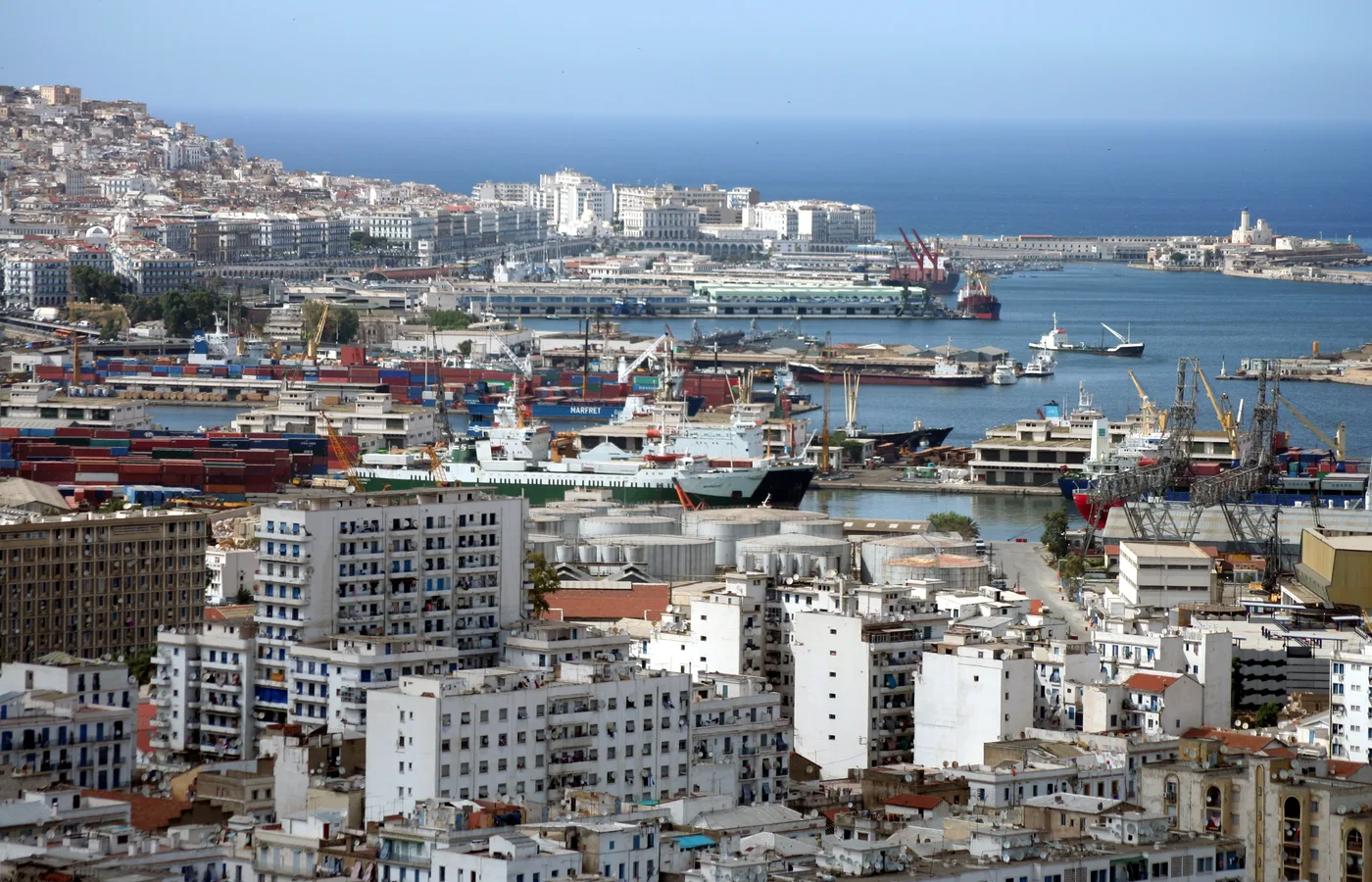
In 2026, Algeria’s property market can no longer be read only through agency windows or online listing groups. It is read first through a more visible legal framework, a sharper demand for developer quality, and urban demand that keeps evolving with demography, the diaspora and tourism. For a buyer, an investor or a diaspora member considering a gradual return, the question is no longer only “where to buy”, but “under what conditions to buy”.
This article offers an editorial reading of what is truly changing — and of what, by contrast, remains structural. It draws on the law of real-estate development, on documentary security mechanisms, and on the realities of the markets in Algiers, Oran and Constantine. It replaces neither a notary, nor tax advice, nor personalised due diligence.
This article is an editorial analysis and does not constitute legal, tax, financial or notarial advice.
A market under demographic and urban pressure
According to the National Statistics Office (ONS), Algeria’s population stood at about 46.7 million in January 2024 and is approaching 47 million by mid-2025. That dynamic is not an abstraction: it feeds lasting pressure on housing, especially in major agglomerations, peri-urban corridors and better-served coastal zones.
Alongside that pressure sits a factor often underestimated in purely “price per square metre” analyses: the structure of demand. A significant share of transactions involves extended families, secondary-residence projects for the diaspora, or acquisitions aimed at seasonal rental in tourist cities. In 2024, the Algerian National Tourism Office (ONAT) recorded 3,548,000 visitors, of whom about 1.093 million came from the diaspora. These flows do not automatically create a property boom everywhere, but they reinforce the relative attractiveness of certain segments: well-located furnished apartments, residences near the coast, and properties close to airports and urban centres.
In 2026, the “real” change is therefore not a brutal break in prices — a phenomenon hard to generalise without homogeneous series and without the risk of over-interpretation — but a gradual maturation of expectations. Buyers, especially those who compare with other Mediterranean markets, ask for more traceability, compliance and clarity on delivery timelines.
What Law No. 11-04 continues to require
Law No. 11-04 of 17 February 2011 on real-estate development remains the foundation. It defines the framework in which a developer may market properties, including through vente sur plans (off-plan sale), and sets transparency and guarantee obligations. It is not a technical detail for specialists: it is the architecture that separates a serious project from an opaque operation.
In editorial and operational practice, several points remain decisive in 2026:
- the existence of a developer agrément (approval) issued at the competent wilaya level;
- the developer’s registration or verifiability through public mechanisms linked to the national register of developers (tableau national des promoteurs);
- compliance with regulated marketing rules, especially for off-plan sales, under Executive Decree No. 13-431;
- the presence of legal guarantees, including the garantie décennale (ten-year structural guarantee), once the property is delivered and accepted under the conditions provided.
These elements do not “change” every year like a marketing trend. What evolves is the level of attention buyers and specialised media give them. In 2026, a developer without clear approval, without a documented project, or unable to explain the land status of the plot, appears immediately as a warning signal — no longer as a mere “opportunity to grab quickly”.
For a deeper documentary journey, see our guide Documents for buying property in Algeria and our analysis of risks to anticipate.
Approval, wilaya and national register: verification becomes a reflex
One of the most concrete changes for the informed buyer is methodological. Before even discussing price, the logical sequence has become:
- identify the developer and their agrément;
- cross-check information with available official sources (wilaya, mechanisms linked to the national register);
- verify the land status and the trajectory of the livret foncier (land title booklet);
- examine the contract, payment schedules and delivery conditions;
- for off-plan sales, ensure compliance with the Law 11-04 / Decree 13-431 framework.
This discipline does not eliminate every risk, but it sharply reduces the costliest mistakes: paying a deposit without a clear title, confusing a building permit with legitimate marketing, or believing that a 3D model equals a legal guarantee.
The Fonds de garantie et de caution mutuelle de la promotion immobilière (FGCMPI) — the mutual guarantee fund for real-estate development — fits this sector-security logic. Its existence recalls that development is not an improvised private bargain: it is a regulated activity, with surety and guarantee mechanisms designed to protect public confidence. In 2026, mentioning the FGCMPI in a purchase conversation is no longer a sign of excessive distrust; it is a marker of seriousness.
Our dossier How to check a real-estate developer in Algeria details a practical control grid. For projects marketed before completion, also read Buying off-plan in Algeria and S.A.F.E and real-estate analysis method.
Off-plan sales: more framework, less improvisation
Vente sur plans remains attractive: it allows earlier entry into a programme, sometimes with a more accessible payment schedule, and the chance to choose still-available typologies. But it is attractive only if it is genuinely framed.
The pair Law No. 11-04 and Executive Decree No. 13-431 sets the principle: marketing before completion is not a grey zone. It requires documents, formalities, guarantees and readable commitments. In 2026, the most experienced buyers ask simple but decisive questions:
- Is the developer approved?
- Is the land clearly identifiable and is the land status coherent?
- What exactly does the contract say about deadlines, penalties, plan changes and payment terms?
- What insurance and guarantees (including the ten-year guarantee after delivery) are provided?
- What role does the notary play in securing the deed and the transfer?
These questions do not slow a good project. They accelerate the filtering of bad ones. They also avoid a frequent confusion: believing that “off-plan” automatically means “cheaper and less risky”. In reality, the price may be attractive, but documentary risk, if poorly managed, costs more than an initial saving.
Land conservation, livret foncier, notary: the chain of truth
In Algerian real estate, security often plays out before the emotion of the viewing. The livret foncier, conservation foncière (land registry / land conservation office) and the notary form a chain of truth. When one link is unclear, the whole file must be slowed down.
In 2026, three errors remain too frequent:
- Confusing possession with ownership. Occupying, fitting out or “knowing the seller” does not replace a clear title.
- Underestimating co-ownership in undivided shares (indivision). An inherited or family property can be legally complex; rushing signature without mapping rights holders is a classic source of disputes.
- Neglecting the real condition of the property. Even with a correct title, structural disorders, non-conformities or unclear charges can turn a “good price” into a bad deal.
The garantie décennale, when it applies in the context of construction and delivery, is an important protection. It does not dispense with careful inspection and rigorous contractual reading. It is not a talisman; it is a framed guarantee whose scope must be understood.
For a reading of prices and micro-markets in the capital, see Property prices in Algiers.
What is really changing in 2026 (and what is not)
What is changing
- A more demanding culture of verification, especially among the diaspora and informed investors.
- Increased attention to developer compliance (agrément, wilaya, national register, FGCMPI).
- A finer reading of local markets: Algiers is not Oran, which is not Constantine; and within Algiers, Hydra is not Bab Ezzouar.
- A growing role for tourism and mobility in certain rental segments, without justifying unrealistic projections.
What is not changing
- The need for a clear title and passage through the notary.
- The centrality of Law No. 11-04 for real-estate development.
- The fact that a beautiful 3D render never replaces the livret foncier and conservation foncière.
- The importance of calming artificial urgency (“last opportunity”, “exceptional price until tomorrow”).
In other words, 2026 is not the year of a magical market revolution. It is more a year of consolidating good reflexes. Serious actors gain in readability; opaque circuits lose credibility with a better-informed public.
Algiers, Oran, Constantine: three logics, one framework
Comparing the metropolises remains useful, provided the comparison is not turned into an absolute ranking. Algiers concentrates a major share of institutional, diplomatic and premium demand. Oran combines port, industry, coastline and western dynamics. Constantine articulates history, topography and its role as an eastern crossroads. In all three cases, the legal framework for development and documentary security remains the same; what varies are demanded typologies, potential rental yields (variable and never guaranteed), and the depth of the secondary market.
For a grid by investor profile, read Algiers, Oran, Constantine: where to invest for your profile?. For the capital’s specific positioning, see Why Algiers still attracts property investors.
Buying method in 2026: an editorial checklist
Without substituting for a professional, a clear method can be summarised as follows:
- Define the use: main residence, secondary home, long-term rental, seasonal rental, family wealth.
- Set a zone and a budget with a margin for fees, works and contingencies.
- Filter the developer or seller before becoming emotionally attached to the property.
- Read the land file: booklet, conservation, consistency of areas and boundaries.
- Involve the notary early, not “at the end to sign”.
- Document every payment and avoid off-contract circuits.
- Plan the post-purchase: rental management, charges, maintenance, tax rules applicable to your status.
This method is neither spectacular nor “viral”. It is effective. In 2026, the buyer’s competitive advantage is no longer access to rare information about an address, but the ability to execute this sequence correctly.
FAQ
Does Law No. 11-04 still apply fully in 2026?
Yes. It remains the reference text for real-estate development. Practices evolve; the framework text remains. Any developer operation must be read against it, especially for off-plan sales.
Can you buy off-plan safely?
You can sharply reduce risk by requiring approval, land documents, a compliant contract (Law 11-04 and Executive Decree 13-431), and notarial support. No transaction is “risk-free” by nature.
What role does the FGCMPI play?
The mutual guarantee fund for real-estate development participates in sector security. Its mention in a file is a positive vigilance point, but it does not replace full verification of the developer and the property.
Is the livret foncier enough on its own?
It is a central document, but it sits in a chain: land conservation, file coherence, notary involvement, control of charges and any undivided ownership. An isolated document never summarises the whole risk.
Should you favour Algiers for investing in 2026?
Algiers remains a deep and strategic market, but the “best” choice depends on profile, horizon and risk tolerance. Oran and Constantine offer other logics. See our city and investment dossiers.
Do tourism figures influence real estate?
They influence certain segments (seasonal rental, coastal proximity, airport hubs), without automatically creating a generalised rise. The 3,548,000 visitors recorded in 2024 (ONAT), including about 1.093 million from the diaspora, are context, not a yield guarantee.
Sources
- National Statistics Office (ONS) — demographic data: https://www.ons.dz
- Algerian National Tourism Office (ONAT) — 2024 tourism attendance: https://www.onat.dz
- Official Journal / texts on real-estate development (Law No. 11-04 of 17 February 2011): https://www.joradp.dz
- Ministry of Housing, Urban Planning and the City — real-estate development framework: https://www.mhuv.gov.dz
- Viva Algérie — Buying off-plan in Algeria
- Viva Algérie — Property purchase documents
- Viva Algérie — Checking a developer
This article is an editorial analysis and does not constitute legal, tax, financial or notarial advice.
Related reading
Mohammadia fire: investigation, safety and confirmed facts
Respectful sourced coverage of the Mohammadia tragedy, without victim imagery or speculation.
Read article
Algeria’s real-estate legal framework: what a buyer must understand before purchasing
Property law in Algeria: notary, title deed, livret foncier, Law 11-04, off-plan sales and essential checks before you buy.
Read article
Algerian diaspora: buying property in Algeria from abroad
Editorial guide for the Algerian diaspora: documents, notary, payments, off-plan purchase and checks for acquiring a property from abroad.
Read article