Real estate
New housing in Algeria: opportunity or market under pressure?
New housing in Algeria attracts buyers and the diaspora, but remains marked by supply tensions, delays and development risks. Editorial analysis.
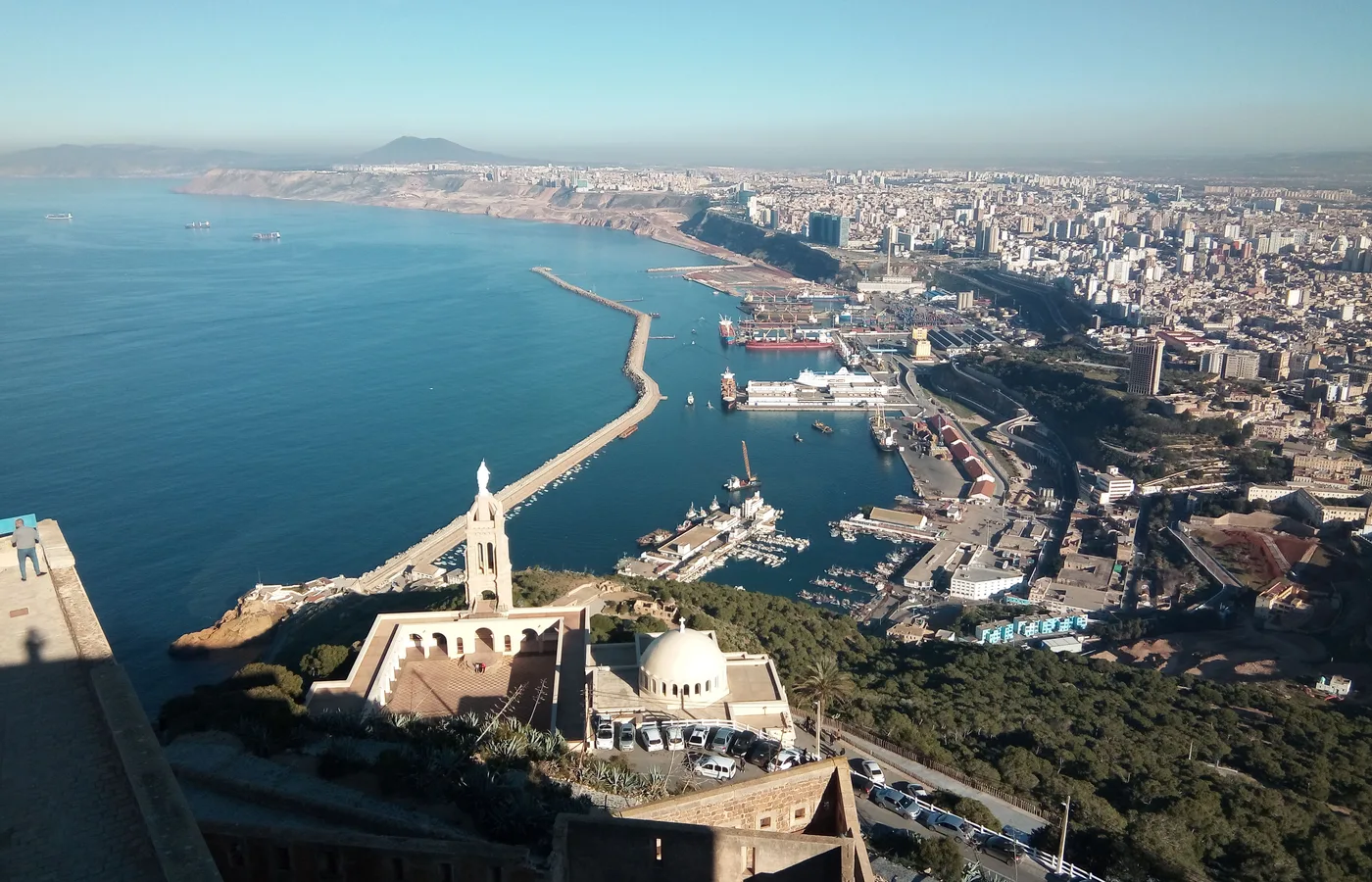
New housing crystallises a familiar tension in the Algerian market. On one side, real demand for modern comfort, parking, lifts and better-designed common parts. On the other, irregular promotional supply, sometimes long delays, and commercial information that moves faster than legal documentation. Between these two poles, the buyer seeks a simple answer: opportunity or market under pressure?
The useful answer is not binary. New housing can be an opportunity for certain profiles, in certain cities, provided one accepts that the market remains structurally tight — on prices in sought-after zones, on delivery timelines, and on execution quality.
This article is an editorial analysis and does not constitute legal, tax, financial or notarial advice.
What “new housing” means in Algeria
Under the “new” label several realities coexist:
- private real-estate development framed by Law No. 11-04 of 17 February 2011;
- programmes in vente sur plans (off-plan sale), with reservation or off-plan sale contracts (Executive Decree No. 13-431);
- recently delivered homes still being marketed;
- operations linked to public or semi-public schemes, distinct from purely commercial development.
Confusing these categories leads to bad price and risk comparisons. An apartment delivered with a livret foncier available does not have the same profile as a lot reserved on a slab barely poured.
The real strengths of new housing
A product adapted to contemporary uses
Older stock, especially in dense centres, does not always meet current needs: parking, insulation, room layout, accessibility. New housing often offers a clearer answer to these expectations, which explains part of residential and family demand.
Relative readability of the product
In a good file, the buyer has plans, a description, a schedule and a developer counterpart. That readability does not always exist on the second-hand market, where documentary irregularities and succession situations sometimes complicate the transaction.
A lever for the diaspora and organised first-time buyers
For part of the Algerian diaspora, new housing offers a more “frameable” journey at a distance — provided trust is not delegated blindly. For local households that plan far ahead, off-plan purchase can also spread the financial effort.
Why the market remains under pressure
Localised supply / demand imbalance
Tension is not uniform across the whole territory. It concentrates where employment, services, coastline or infrastructure create lasting pressure: Algiers and its periphery, certain Oran axes, attractive coastal poles. Elsewhere, new housing may exist without immediate resale liquidity.
The National Statistics Office (ONS) documents the country’s demography and urban dynamics; it does not publish a single “index” of new-housing prices that one could cite as national truth. Any claim of generalised yield or rise without a source should be discarded.
Prices and purchasing capacity
In sought-after zones, new housing often displays prices that filter part of demand. Opportunity is then not “the market” itself, but the specific property whose price, location and calendar match a real budget. In Algiers, our page Algiers property prices helps contextualise without turning an estimate into a promise.
Execution and information risks
The weak point of promotional new housing remains execution: delays, finishing gaps, opaque communication, poorly secured payments. These risks are not theoretical; they sit at the heart of off-plan purchase dossiers and property purchase risks.
The presence of an approved developer, recourse to the notary, careful contract reading and, where applicable, positioning within the FGCMPI mechanism reduce information asymmetry. They do not eliminate it.
Opportunity: for whom, and under what conditions?
Profiles for whom new housing can be relevant
- Planned main residence: household able to wait for delivery without housing rupture.
- Replacement of unsuitable housing: need for space, accessibility or parking.
- Prudent family wealth: acquisition for a clear use (habitation, family lodging), without an aggressive yield scenario.
- Methodical buyer: ready to verify agrément, land, contract and schedule before reserving.
Profiles for whom new housing is often a poor tool
- Buyer who needs to move in within three months.
- Investor projecting immediate rental cash-flow without local study.
- Acquirer who chooses only on a model or commercial influence.
- Person who cannot absorb a schedule slip.
Read new housing as a market of projects, not as an index
New housing works project by project. Two programmes in the same neighbourhood can present very different risk levels depending on the developer, the land, site financing and payment governance.
That is precisely the angle of S.A.F.E — Security, Analysis, Fidelity & Expert Guidance: an international proprietary real estate analysis and pre-screening methodology that is not an official state certification and replaces neither the notary nor technical controls. It serves to structure the question: does this project deserve my attention?
For Algiers, cross this logic with buying off-plan in Algiers and the detailed checks in our guide points to verify before reserving.
New housing, tourism and territorial narrative: do not mix indicators
Algerian tourism recorded, according to the National Tourism Office (ONAT), 3.548 million visitors in 2024. This figure is useful for understanding the attractiveness of certain coastal and heritage cities. It does not, on its own, prove that a new programme will offer high rental occupancy or capital gain.
Likewise, infrastructure and planning outlooks — discussed in long-term analyses such as Algeria 2030 — create context, not a guaranteed yield. World Bank or IMF reports, when cited, concern macroeconomic aggregates; they do not validate a price per square metre in a specific lot.
Zones to watch beyond central Algiers alone
Outside the hypercentre, new housing also plays out on corridors and mid-sized coastal cities. Tipaza, Béjaïa and Oran illustrate distinct dynamics — coastline, tourism, employment, accessibility — analysed in Tipaza, Béjaïa, Oran: zones to watch.
The question is not “where is it cheapest?”, but “where does the price / use / liquidity pair remain coherent for my horizon?”.
Delivery quality: the real litmus test
A market under pressure sometimes pushes to deliver fast… or to market too early. The wise buyer looks at:
- the real progress rate (not only the announced one);
- coherence between description and finishing samples;
- organisation of delivery and lifting of reservations;
- clarity of post-delivery documents to finalise ownership.
The garantie décennale and the builder / developer responsibilities form part of the legal landscape after reception. They do not compensate for a bad programme choice.
How to decide: a simple decision grid
- Use: live, lodge, wealth — without a fantasy scenario.
- Horizon: can I wait for delivery?
- Total budget: price + fees + possible personalisation works + delay cushion.
- Developer: agrément, history, transparency (verification method).
- File: land, compliant contracts (Law 11-04, Decree 13-431), FGCMPI if applicable.
- Location: services, accessibility, local liquidity.
- Alternative: would a delivered property or a documented second-hand home be more rational?
If three or more answers are fuzzy, “new opportunity” becomes “new bet”.
Key takeaways
New housing in Algeria is neither an abstract bubble nor a universal opportunity. It is a segment under localised pressure, where project quality weighs more than market narrative. Opportunity exists for the disciplined buyer, financed to wait, and able to read a development file. Pressure, for its part, penalises haste, information asymmetry and confusion between brochure and contract.
In practice, treat every new programme as a temporary company you are joining: who runs it, how cash enters and exits, what land underpins it, and what happens if a milestone slips. That mindset — closer to project due diligence than to window shopping — is the difference between a usable asset and a long dispute. Cross-check promotional claims against the notary’s reading, against conservation foncière where relevant, and against delivery histories of previous buildings by the same developer. When those cross-checks hold, new housing can be a rational tool; when they do not, the “opportunity” is mostly marketing.
To deepen the legal and documentary framework, read the real-estate legal framework in Algeria and the purchase documents page. For project pre-selection, explore S.A.F.E. Also see our real estate category for related market readings.
FAQ
Is new housing always more expensive than second-hand?
Not always, and not everywhere. In some segments, off-plan new may appear more accessible than a well-located delivered property; in others, the new premium is clear. Compare on equal footing: location, legal status, charges, and real date of enjoyment.
Can one speak of a “national” new-housing market?
With difficulty. Price and supply tensions are local. Algiers, Oran or a mid-sized inland city do not behave as a single market.
Is off-plan purchase riskier than buying delivered?
In general, yes on execution and delay risk; not necessarily on documentary risk, if the development file is clean and the delivered property poorly titled. Each file is judged separately.
Do tourism figures justify buying coastal new housing?
They illuminate territorial attractiveness. They do not demonstrate the profitability of a specific programme. Treat ONAT as a context indicator, not as a property market study.
How to reduce risk without blocking every purchase?
Require agrément, a readable contract, a traceable schedule, notarial reading, and structured pre-selection. Refuse off-framework payments. Accept that a good project can wait an extra week of checks.
Does S.A.F.E guarantee the success of a new-housing investment?
No. S.A.F.E is an international proprietary real estate analysis and pre-screening methodology. It does not promise absence of risk and does not replace notary, technical expert or personalised financial advice.
Sources
- Law No. 11-04 of 17 February 2011 on real-estate development.
- Executive Decree No. 13-431 of 18 December 2013 (reservation and off-plan sale contracts).
- FGCMPI — guarantee framework linked to real-estate development.
- National Statistics Office (ONS) — Algerian demography and official statistics (context, without inventing price indices).
- National Tourism Office (ONAT) — 3.548 million visitors in 2024.
- World Bank / IMF — macroeconomic reports (prudent use, not extrapolated to a specific property).
- Related resources: real estate, buying off-plan, S.A.F.E.
This article is an editorial analysis and does not constitute legal, tax, financial or notarial advice.
Related reading
Mohammadia fire: investigation, safety and confirmed facts
Respectful sourced coverage of the Mohammadia tragedy, without victim imagery or speculation.
Read article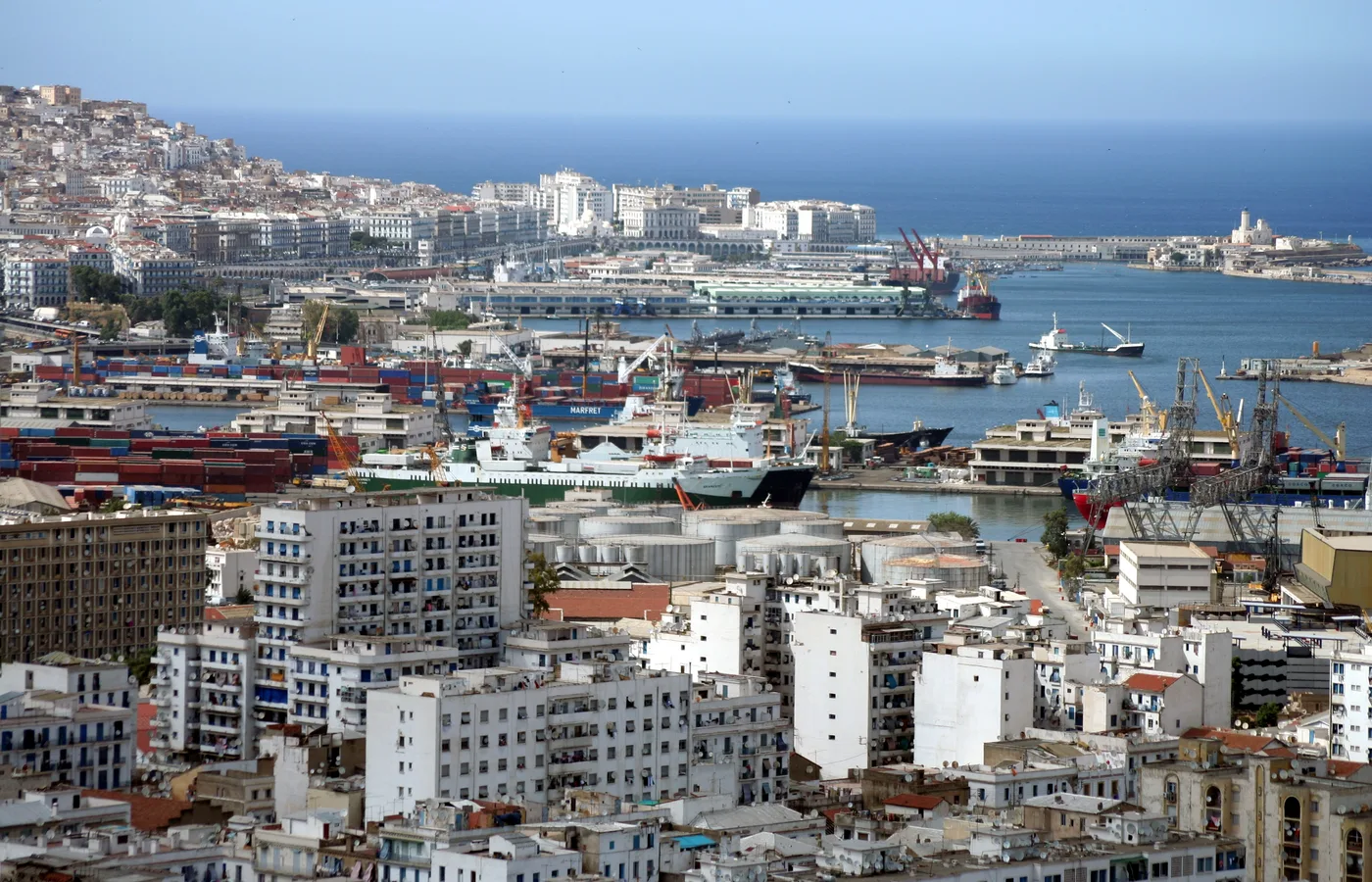
Algerian diaspora: buying property in Algeria from abroad
Editorial guide for the Algerian diaspora: documents, notary, payments, off-plan purchase and checks for acquiring a property from abroad.
Read article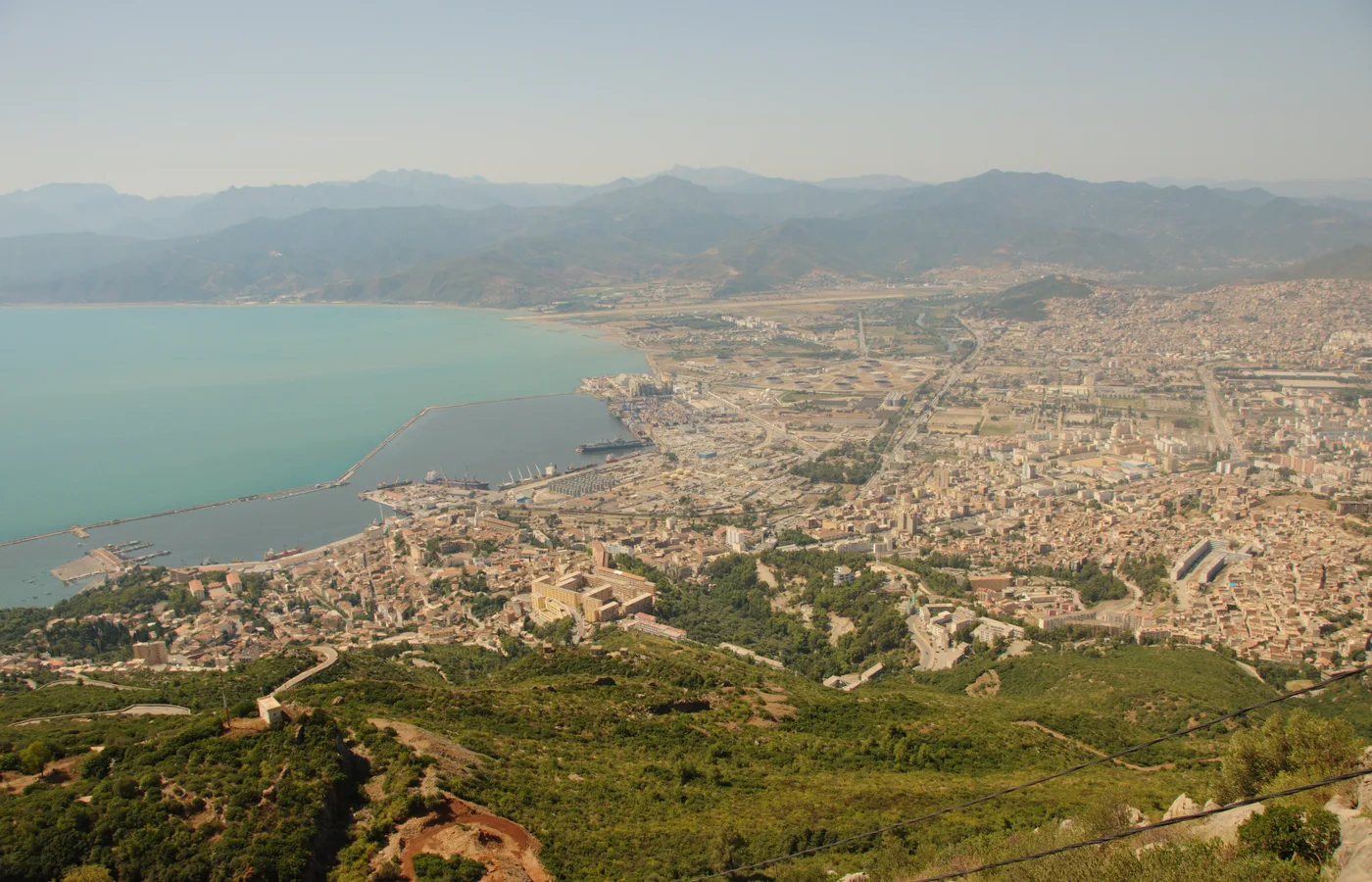
Tipaza, Béjaïa, Oran: zones to watch beyond Algiers
Beyond Algiers, Tipaza, Béjaïa and Oran offer distinct dynamics between coast, tourism, employment and property. A territorial reading for 2026.
Read article